Quality assurance and documentation
We quality assure all fire seals through thorough inspection and detailed photo documentation that shows both the work process, the materials used and the finished result.

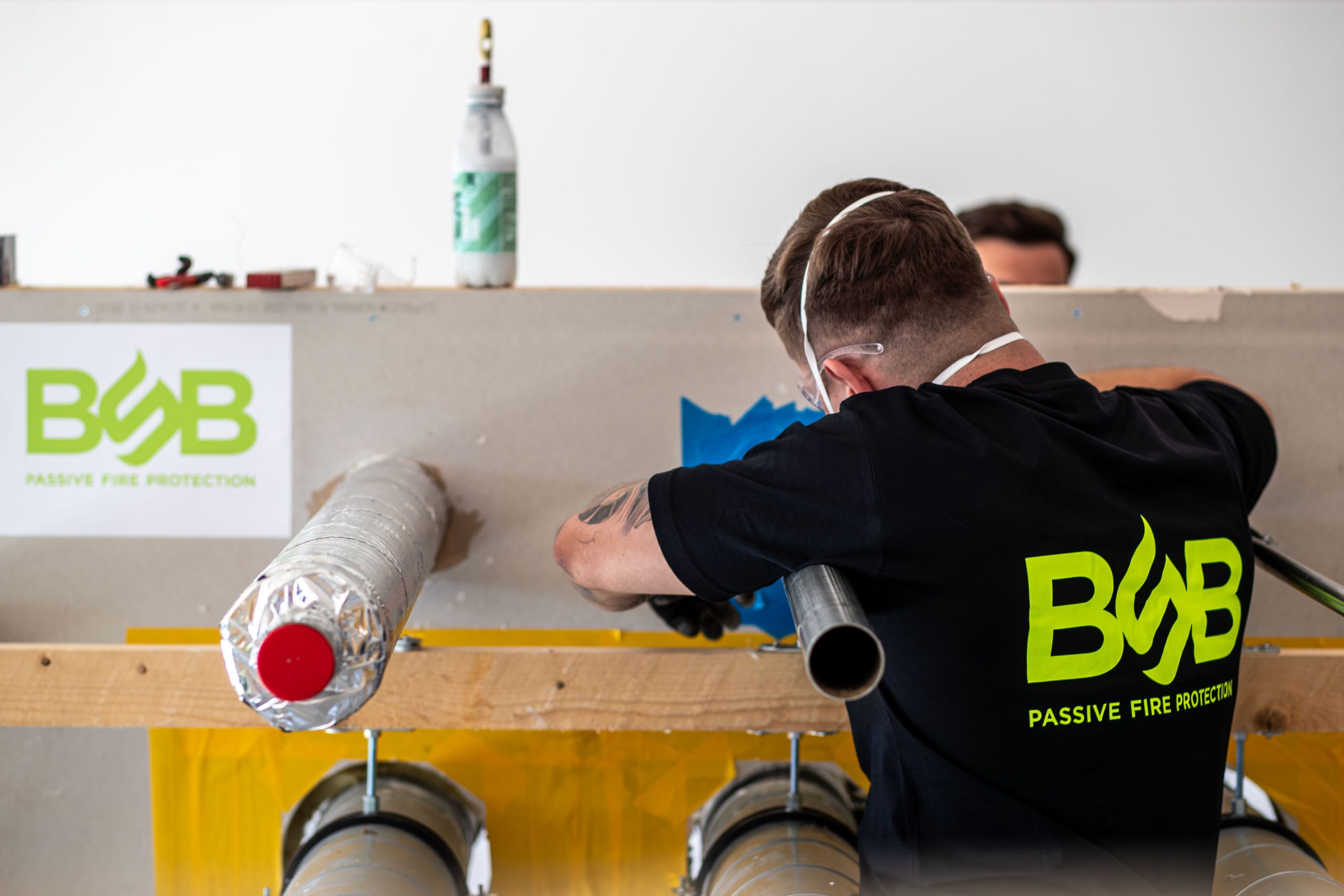

We quality assure all fire seals through thorough inspection and detailed photo documentation that shows both the work process, the materials used and the finished result.

Our specialists are trained through the BSB Academy, where we combine theoretical knowledge and practical training to ensure that all tasks are carried out according to current standards and best practices.

We deliver fire protection solutions that combine carefully selected materials, precise workmanship and full documentation – so that quality can be confirmed both upon delivery and throughout the lifetime of the installation.
At BSB, we help both small and large companies secure their buildings through professional fire suppression. Whether you run a small business that needs peace of mind on a daily basis or a large commercial building where the task is complex and requires an overview, we can provide the right solution. Our experienced installers ensure that all fire requirements are met and that your project stands strong – both technically and in terms of safety.
Contact us today for a customized fire suppression solution that protects people, buildings and assets.

Fire suppression is a key discipline in passive fire protection. When cables, pipes or ventilation ducts are routed through walls, ceilings or floors, they create openings where fire and smoke can spread rapidly in case of fire. Fire stopping seals these penetrations and ensures that the building element retains its fire resistance.
For example, if a wall or floor deck is classified to resist fire for 60 or 120 minutes – so-called EI60 and EI120 classifications – any penetration must be sealed with a solution that can maintain the same fire rating. This maintains the location of the fire, allowing people to evacuate safely and giving the fire brigade time to act.
Proper fire suppression is not just a technical requirement. It is also a prerequisite for protecting lives, structures and assets. For businesses, it also means reduced risk of business interruption and financial consequences in the event of a fire. At BSB, we are experienced in solving the most complex fire extinguishing cases in collaboration with supplier consultants. We make sure we find the right solution so that both clients and contractors can rest assured that the work meets applicable standards and insurance requirements.

Easier, safer and more efficient fire protection through technology for modern buildings
The choice of method depends on the type of installation, fire class and building materials. BSB works with proven system solutions that have been tested for the specific purpose.
For smaller penetrations, fire sealing compounds are often used, which are flexible and absorb movements in the structure.
Plastic pipes are typically secured with fire sleeves that expand in case of fire and seal the opening.
For larger openings and technical shafts, fire plates and combined sealing systems are used, which are adapted to the installations and combined with e.g. sealants for complete tightness.
We always assess which method is the most optimal based on fire requirements, operational safety and future access to the installations. This way, you get a solution that is both safe and practical in relation to the function of the building.
In Denmark, fire stopping is regulated by the Danish Building Regulations (BR18) and the European standards DS/EN. The regulations require that penetrations in fire-rated walls and floors are closed with solutions that are tested and documented to maintain the fire resistance of the structure.
In particular, fire resistance is required so that the closure matches the fire classification of the structure. In addition, materials such as sealants, cuffs and sheets can only be used in approved systems that have been tested for the specific purpose. Finally, documentation in the form of photo registration, labeling and reports are required so that work can be tracked and approved.
Firestopping is required wherever installations penetrate fire-rated structures. This includes cable and pipe penetrations that can create open channels for smoke and fire, as well as ventilation ducts where fire can spread quickly without proper sealing. Technical shafts and installation walls with many installations in one place require special system solutions, and all penetrations in floor decks must be fireproofed to prevent vertical spread.
This applies to new construction, renovation and existing buildings where older fire stops are often inadequate.
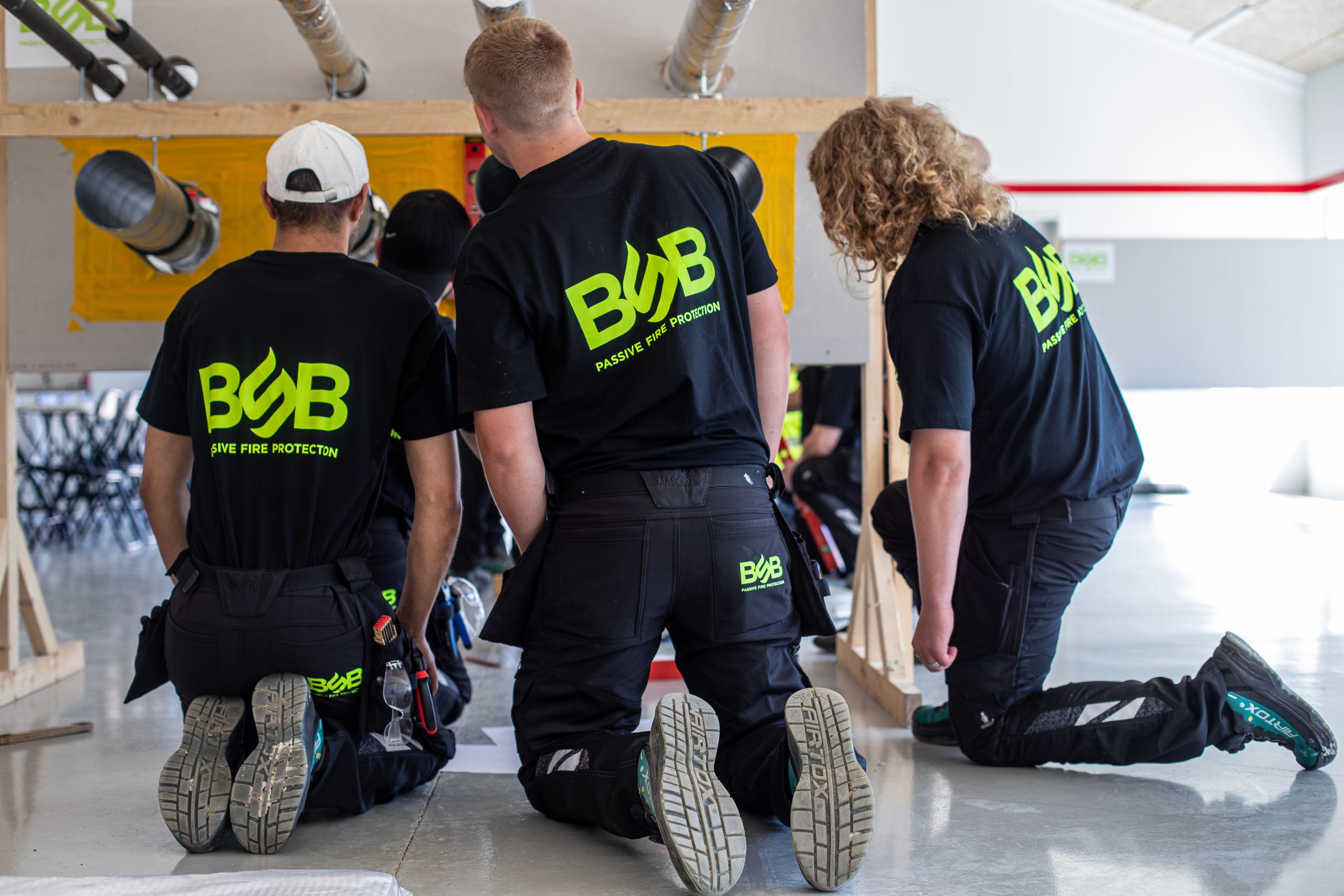
Documentation is an indispensable part of a proper fire closure. Without adequate documentation, an otherwise correct solution can be rejected by the project’s assigned fire consultant.
We ensure photo documentation of all fire closures, labeling with information about system type, fire class and execution date, as well as a comprehensive report so that everyone involved has a full overview. We photo-document the entire execution process in the different stages so that it can always be documented that all technical specifications have been met.
Our installers are experts in the use of the chosen systems and we work according to a defined quality process. This gives clients, consultants and contractors peace of mind and full assurance that requirements are met.
Incorrect or inadequate fire closure can have serious consequences. Openings that are not properly sealed can lead to rapid fire and smoke spread, rendering escape routes useless and increasing the risk of injury. It can also cause extensive property damage, legal issues or denial of insurance coverage. For businesses, a fire can mean long-term business interruption and major financial consequences.
We have many years of experience in fire suppression in buildings, homes and institutions. Our certified installers work according to the latest standards and methods, ensuring high quality and thorough documentation in all projects. We work closely with clients, contractors, consultants and authorities to deliver solutions that protect people, buildings and assets.
When you choose BSB, you get a partner that combines professional expertise with practical experience and takes responsibility for getting the job done right the first time, every time.
Proper fire suppression is an investment in safety, security and operational reliability. At BSB, we help you every step of the way, from initial advice to final execution and documentation.
Whether you are a contractor, developer, consultant or operator, we deliver a solution that fits your project. We take responsibility for getting it right the first time, so you can be confident that your building meets all requirements.
Contact us today for a no-obligation review or a concrete offer. Together, we’ll find the solution that best secures your building.
Contact BS Brandsikring today for questions, advice or a no-obligation quote on our fire protection services. As your one-stop shop for passive fire protection solutions, we are ready to help you protect your building components against fire and smoke spread.


